About Ochsner
Ochsner Health is the leading nonprofit healthcare provider in the Gulf South. Ochsner inspires healthier lives and stronger communities through our mission to serve, heal, lead, educate and innovate.
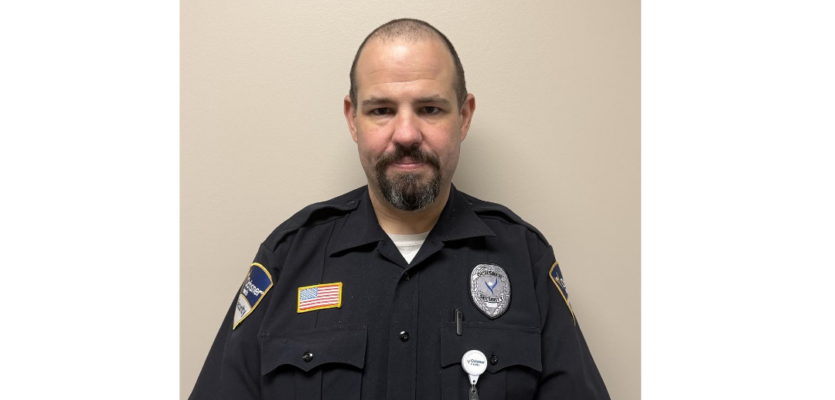
For much of his life, Eric Abshire focused on serving others. After leaving the military, he built a career in security, spending about 15 years protecting and helping those around him. Today, he continues that mission as an armed security guard at Ochsner St. Martin Hospital, but his path to Ochsner began as a patient whose life was transformed through the care he received.
Eric’s health journey started after years of facing difficult challenges. Like many veterans, he carried the weight of experiences from his military service and later personal hardships. In the summer of 2025, he knew his health was declining.
“I couldn’t sleep. I couldn’t get comfortable,” Eric recalled. “I just knew something was wrong.”
When he went to the hospital in June 2025, doctors delivered life-changing news: his liver was failing. The diagnosis became a turning point.
Determined to reclaim his health, Eric made an immediate commitment to change his lifestyle habits. He focused on improving his overall well-being and lost nearly 70 pounds. While the lifestyle changes helped, the damage to his liver was too severe to reverse.
By December 2025, ongoing health concerns led his physician in Lake Charles to refer him to the Ochsner Transplant Institute at Ochsner Medical Center - New Orleans. There, specialists diagnosed him with advanced alcohol-related cirrhosis. His liver function continued to decline, and his kidneys were beginning to be affected as well. His care team determined he needed a liver transplant.
Eric was admitted to the hospital on Dec. 4, where he remained under the care of Ochsner’s transplant team for more than a month. Throughout that time, physicians, nurses and support specialists worked around the clock to monitor his condition and prepare him for the transplant procedure.
“The transplant team was incredible,” Eric said. “They were there every day making sure I had everything I needed.”
In late December, Eric received the call that a suitable organ was available.
On Dec. 28, Eric underwent a liver transplant that lasted about seven hours. When he woke up after surgery, he immediately noticed a difference.
“I felt like a brand-new person,” he said. “For the first time in a long time, I could lie flat and breathe comfortably.”
After spending about a day in the surgical intensive care unit, Eric returned to his hospital room and began focusing on recovery. Motivated by the opportunity he had been given; he was eager to get moving and regain his strength.
Today, Eric carries deep gratitude for the donor who made his recovery possible.
“I understand that the day that saved my life was also a difficult day for another family,” he said. “I’m thankful every day for the gift they gave me.”
A routine follow-up visit unexpectedly led to a new career opportunity. During a conversation with a phlebotomist, he mentioned his background in security, and she encouraged him to apply for an opening with Ochsner’s security team. Today, Eric serves as an armed security guard at Ochsner St. Martin Hospital and says that after everything he experienced as a patient, working for Ochsner feels like it was meant to be.
“Working at Ochsner means a lot because I know firsthand what this organization does for patients,” he said. “I’m here because someone cared for me when I needed it most.”
Eric remains connected with his transplant care team, including hepatologist Nigel Girgrah, MD, and transplant coordinator Caroline Monvoisin. He is also forever grateful to his transplant surgeon, John B. Seal, MD. While his follow-up appointments have become less frequent over time, he continues to stay committed to his health and recovery.
Eric’s advice to others is simple: do not ignore your body. Eric explains how he initially ignored warning signs for too long and hopes others can learn from his experience and seek help before a health crisis arises. He also encourages veterans and others who may feel hesitant to ask for help to use the resources available to them. Finally, Eric expresses the importance of organ donations. “For anybody that’s thinking about being an organ donor, it’s got to be a good feeling that even though you’re not here, someone else is.”
Eric’s story is one of resilience, gratitude and renewed hope. As the recipient of one of 10,000 organ transplants performed by the Ochsner Transplant Institute, his journey reflects the life-changing impact of organ donation and the generosity of donors and their families.
Individuals interested in becoming organ donors can register at ochsner.org/save9
Learn more about the Ochsner Transplant Institute by visiting Ochsner Transplant Institute | Ochsner Health.